A Study of A Window

Why did architect Ove Bang include a door in his window design?

(extract from “A study of a Window” written for the module Representations of Cities 2013)

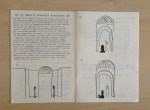
Built on the border of the built up area, in the hills surrounding Oslo, the southeastern facade of this modest, wooden villa is dominated by a large 4,55mx4,55m window. A door providing access to the garden and near surroundings is included into the design. How could this be understood as a representation of a wider space?

To answer this question, Henri Lefebvre’s understanding of space as socially produced, has proven itself fruitful. In The Production of Space, Lefebvre proposes a triadic formulation of spatiality, each of the three moments are referring to different notions of concrete, abstract or lived space. Spatial practice is the concrete space, the tangible walls, roads and windows. Representations of space is the abstract representations of these, being drawings, legislations or researchers articulations. The third Representational space defines the space constantly produced and reproduced in social, everyday life. The imagery and symbolism of this space have their sources in history, through collective or individual memory, identity and imagination. The cultural construct of Norwegian identity being in close and unique contact with nature is highly prevalent, also involving architectural design and history. When writing a history of Norwegian architecture, Christian Norberg-Schulz describes the nations presupposed conditions as difficult topography, unreliable climate, long dark winters and “in general the hardest conditions of life”. According to him, being a province of Denmark between 1380-1814, and then in union with Sweden until 1905 moulded a provincial, peasant culture. A close bond with nature was defined as a national identity in the currents of Romanticism and fight for independence at the end of the nineteenth century. According to Norberg-Schulz, this identity is a defining element of the architecture of the nation (supported by his phenomenological approach to the built environment).

The Spatial practice of including a door in a window design, would correspond with this Representational space, where the symbolism and imagery of a National identity would continuously be produced whenever the habitants used the door to access their garden or the close surroundings. From the terrance in front of the window, the user could turn right an follow a small path leading towards the west almost directly into the wild forrest surrounding Oslo. Historically, these woodlands has been a place for outdoor activities, social gathering and even experiencing youthful sexuality, awarding nature a strong, social value. This correspond to the national imagery outlined by Norberg-Schulz.

The border separating the city from the wild forest to the west, north and east, was drawn up by practical reasons in 1934, and now protected by legislation since 2009, guaranteeing all citizen to live within short distance from wild nature. The southern edge of the city is framed by the fjord, completing the popular slogan describing Oslo as “The Blue, The Green and the City in between”. The Oslo Forest and Countryside Act, from 2009 is brimming with conclusive adjectives describing the forest as ‘rich’ and ‘varied’. This spatiality corresponds with Lefebvre’s second moment of social space, Representations of space. The space produced by Bang’s design and the everyday rhythm of the users are made abstract and communicated through the use of the legal format and stylised sentences. The production of space is taken into the courthouses and various lawyers offices, where the space is interpreted, written and distributed. The same could be said about the slogan “The Blue, The Green…” which produce a specific spatiality aiming at attracting tourists and investors to the northern hemisphere.

Lefebvre’s theory has proven itself as a beneficial gateway into a new understanding of how a window design can relate to a broader urban structure, social life and a national history and identity. Overall it highlights Borden’s fundamental claim that “Architects’ design are simply representations within a wider urban production which also encompasses spatial practice and spaces of representations”, bringing new questions, answers and angles into the light.

Back to The Fenestral Essay Film

Oslo Student TV

Oslo Student TV is a non-profit, volunteer organisation, producing TV for Students in Oslo. I started in the organisation in 2011, as a member of the Arts and Culture Editorial Group. After being trained in camera, editing and journalism, I recommended art events on the biweekly show Kultursofaen.

In June 2011, I was elected Editor of Arts and Culture, where I managed a group of 12 journalists, as well as producing segments. This also made me a member of the board of OSTV.  I held that position for one year. The following is a selection of reports I produced, shot and edited.

Back to Other Projects

Halden Skiklubb 125

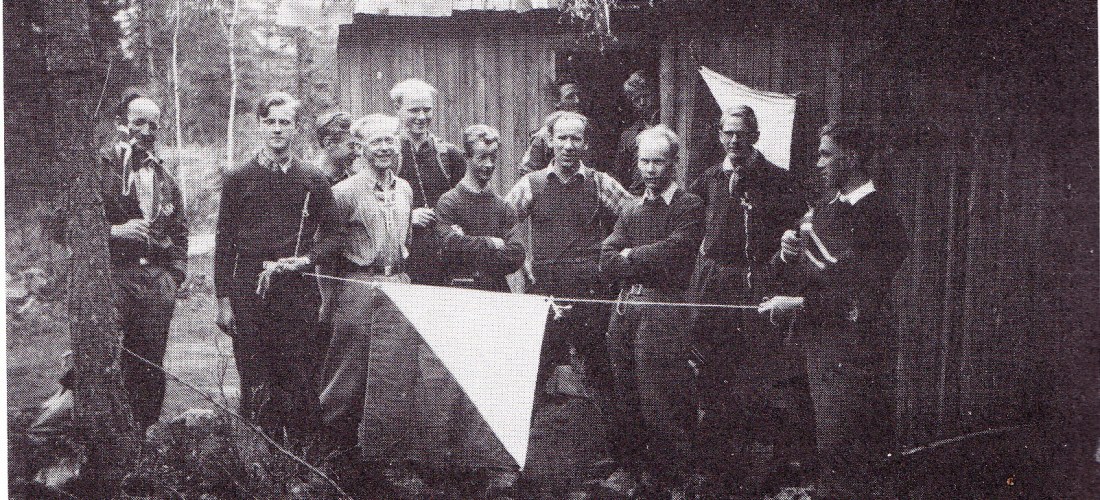
In 2016, Halden Skiklubb – a Norwegian club for Ski, Orienteering and Outdoor activities based in Halden, Norway – celebrated their 125th anniversary. This was marked with a project highlighting the social aspects of being part of the club. Starting up the project in 2009, I became the editor of the anniversary project, conducting archival research and oral history to seek out anecdotes, memories and humorous facts from the club’s ling history. The editorial group consisted of Einar Haugen, Jens Erik Mjølnerød and Arnt Edvin Andersen. Halden skiklubb archive at Høiås, Østfoldmuseene – Halden historiske Samlinger, Rød, and the clubs internal journals Gampe og Gå (1973-1999) and Tiden Ekko (1941 – 1952) stands as the main sources of the project.

Structured around the 52 weeks of the year, the project was presented as a calendar where new articles, consisting of photographs, drawings, text, interviews, anecdotes and film, was published each Wednesday at the Halden skiklubb website. Aiming at emphasising the social and oral aspects of the club’s long history, the project was shared on the internet, as this would allow the discussions and sharing of memories to continue.

Moving through winter, spring, summer and autumn, the project aims at breaking down distance across time by making connections between then and now, juxtaposing material about the 19th century founders, the 1940s resistance movement (including illegal orienteering from 1943), 1950s camping, 1980s world champions and todays children, youths and elders all meeting at the club’s cabin Høiås.

Halden skiklubbs fascinating archive at Høiås.

Halden skiklubbs fascinating archive at Høiås.

Tidens Ekko and Gampe & gå. Halden skiklubb's internal journals - an invaluable historical source.

Tidens Ekko and Gampe & gå. Halden skiklubb’s internal journals – an invaluable historical source.

Høiås - the club cabin of Halden Skiklubb around 1906.

Høiås – the club cabin of Halden Skiklubb around 1906.


Illustration Anna Ulrikke Andersen

The project was realised with the kind support of Halden Skiklubb.

Back to Other Projects

Pies i kot (Cat and Dog) : a documentary about Paweł and Kuba

Pies i Kot, Lars Ole Kristiansen and Anna Ulrikke Andersen (2010)SD, 27:00. Featuring Kuba Adamski and Paweł Brożyński. Language: English.

I met Pawel and Kuba in Vienna, where the three of us studied Art History. Being away from home, they soon became my best friends, family and teachers, and I was introduced to a new world through their different interests. Kuba knew already as a nine year old that he wanted to become an art historian, spending his high school years building models of the churches he liked the best. Today, he is a traditional and renowned scholar of Gothic Architecture, with a particular interest in Classical Vocal Music. Pawel is the complete opposite. His interests ranges from art to literature, cinema, music and philosophy. He embraces everything that is new and exiting, filling his book shelf with a wide range of books and artefacts, including art works from contemporary artist (as a red plastic rabbit). As Art Historians, Pawel and Kuba operates under the same roof. However, one can not overlook their differences, which makes them as cat and dog.

Pies i kot (cat and dog), by Anna Ulrikke Andersen and Lars Ole Kristiansen, was filmed in Krakow, Poland, September 2009 and premiered at the Bom Kræsj Bang festival (Halden, Norway) the following April. The documentary follows the two friends and art historians, investigating their almost unlikely friendship, resulting in a warm and honest film about relationships of all sorts. Beyond this human aspect, Pawel and Kuba, as cat and dog, functions as personifications of the major abyss in Art History, between the traditional connoisseur and the more interdisciplinary approach. Through interviewing her two friends and ‘teachers’, the young, questioning student, Andersen, questions this relationship almost unintentionally, while Kristiansen aims the camera lens at unexpected and humorous aspects of this conflict.

A special thanks to Kuba Adamski and Paweł Brożyński. The project received financial support from Trafo.no and Halden Kommune.

A password to watch the film is available upon request.

Back to Other Projects

Circus Universe – a Comic Book in four Volumes

Between 2008-2011 the project Circus Universe functioned as a creative platform for various questions, ideas and creative outputs. Through music, writing, illustration and performance, I discussed issues relating to entertainment, capitalism, travel and celebration. Each volume was celebrated with a collaborative release event being concerts, readings and exhibitions. The project was managed and created by Anna Ulrikke Andersen. The project received financial support from Trafo.no and Frifond.no

Back to Other Projects