J for Joinery

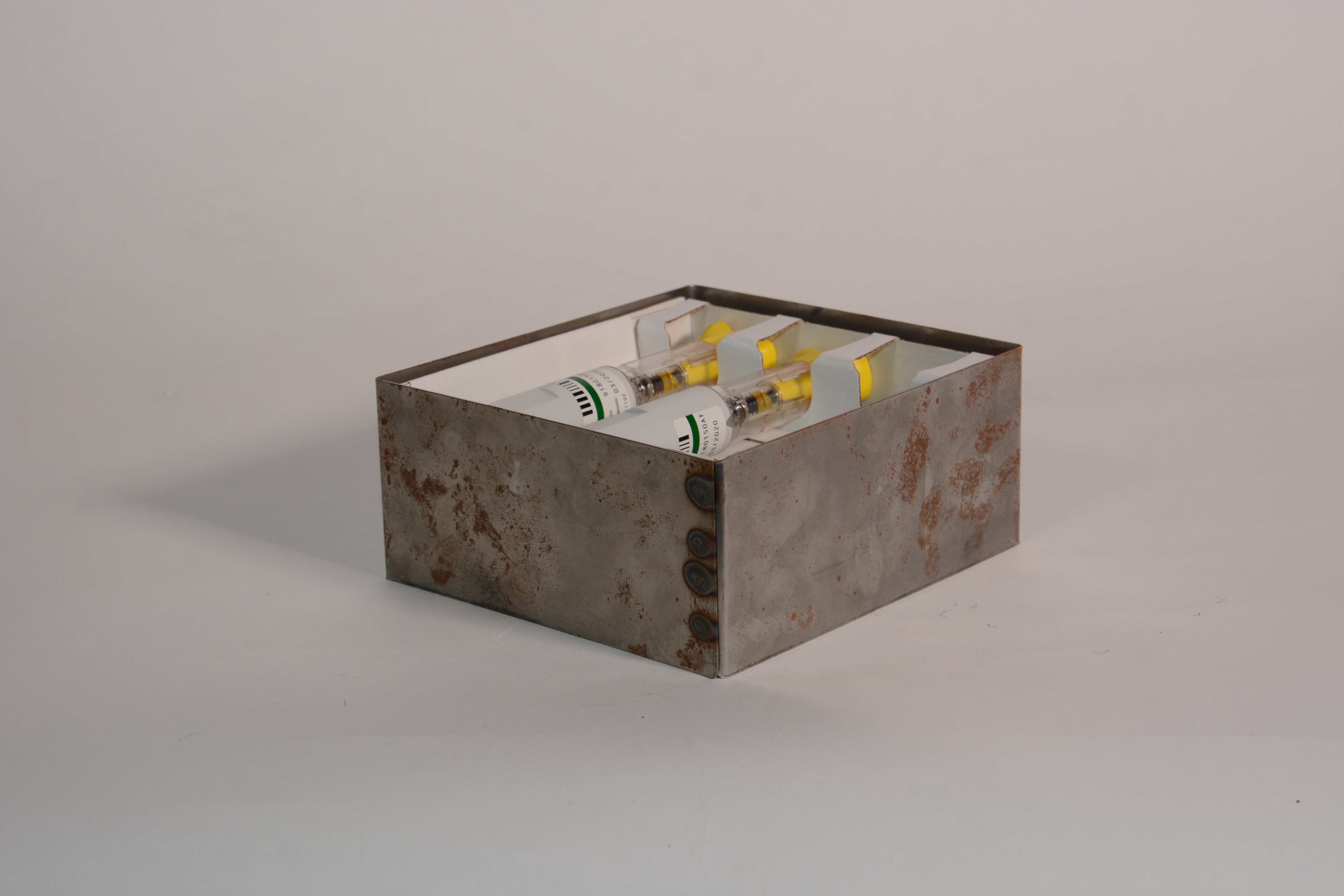
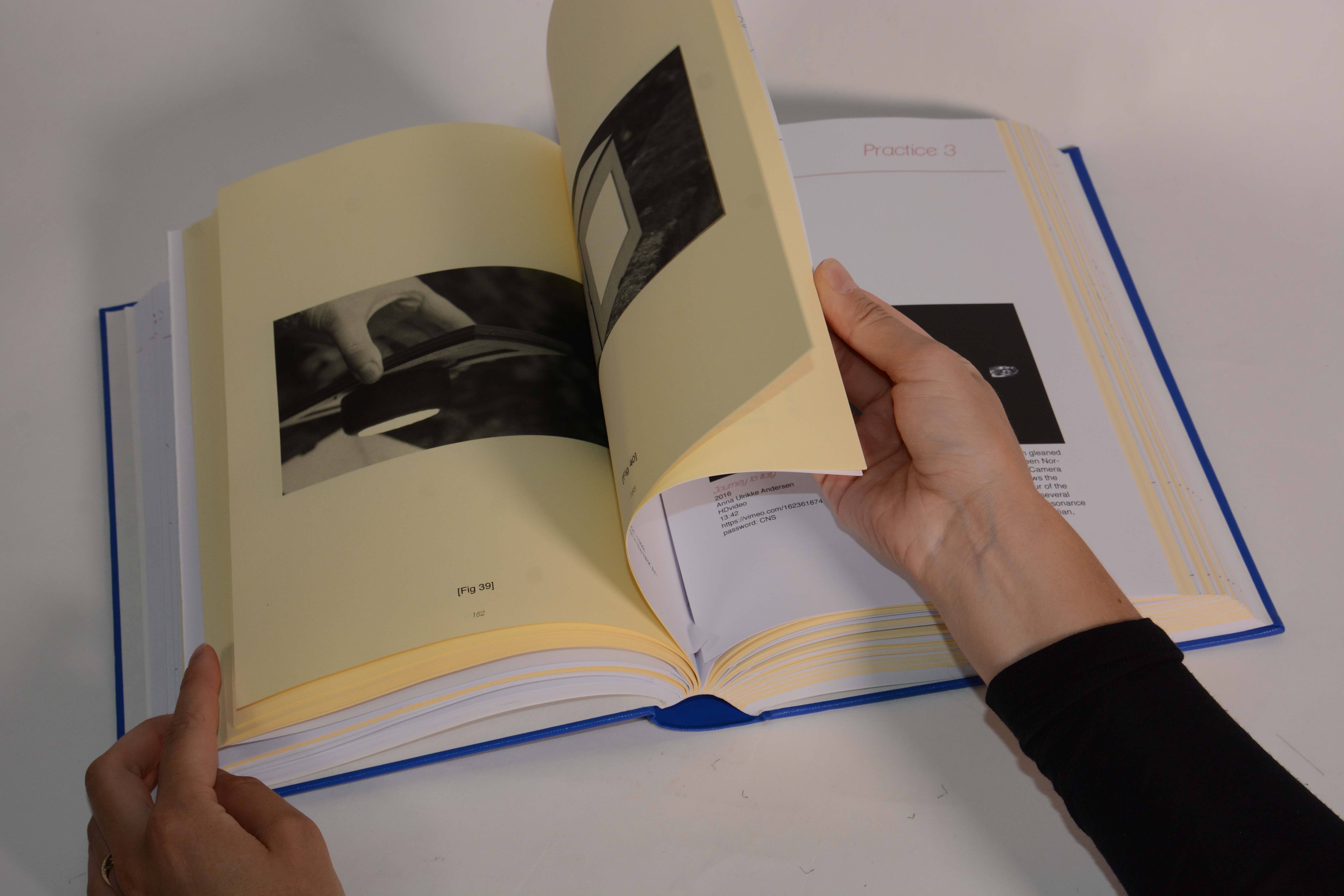
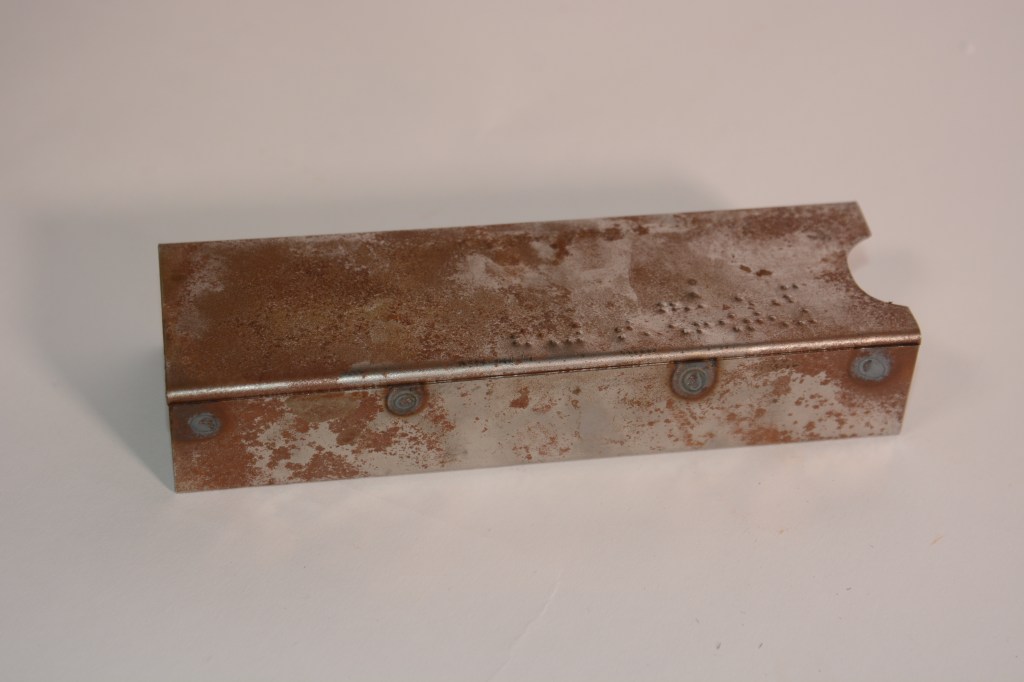
I wanted to explore the process of welding, of bending metal and joining different sections using intense heat. My aim was to understand the experience of bending a stiff material and, thus, get a better sense of what a joint might be.

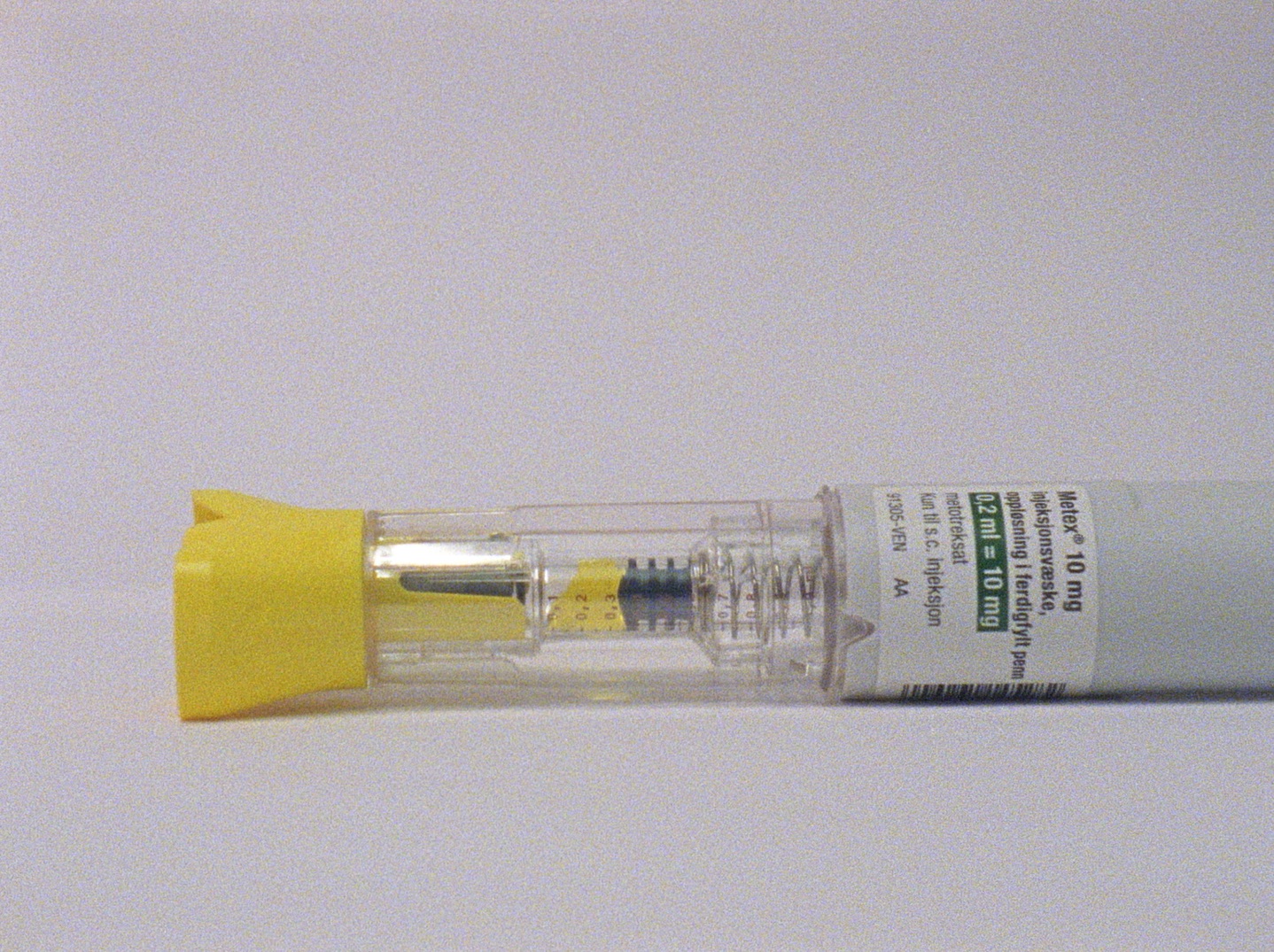
I welded a series of boxes, replicating cardboard packaging of Methotrexate in metal. This included a box of one single injection and the larger ones which housed six prefilled injections. Further, the drug came with a cytotozix drug spill kit. If the patient accidentally fails to inject the liquid into her body, she should clean the toxic liquid up using the spill kit.

The kit contains the following items:

1x FFP3 face piece
2x pair nitrile gloves
1x eye shield
1x plastic apron
1x pair overshoes
1x grey absorbent pad
6x white lint-free wipes
2x 20ml sterile water pod

The side of the cardboard box holds the following instructions:

When I eventually came around to photographing the boxes, time had passed. Rust had overtaken the metal, and the surfaces felt rough and rugged when I touched them. The metal that once had felt so flexible and clean, now felt old. I took the photos before disposing of the boxes, the kits and the remaining injections. For now they were no longer needed.

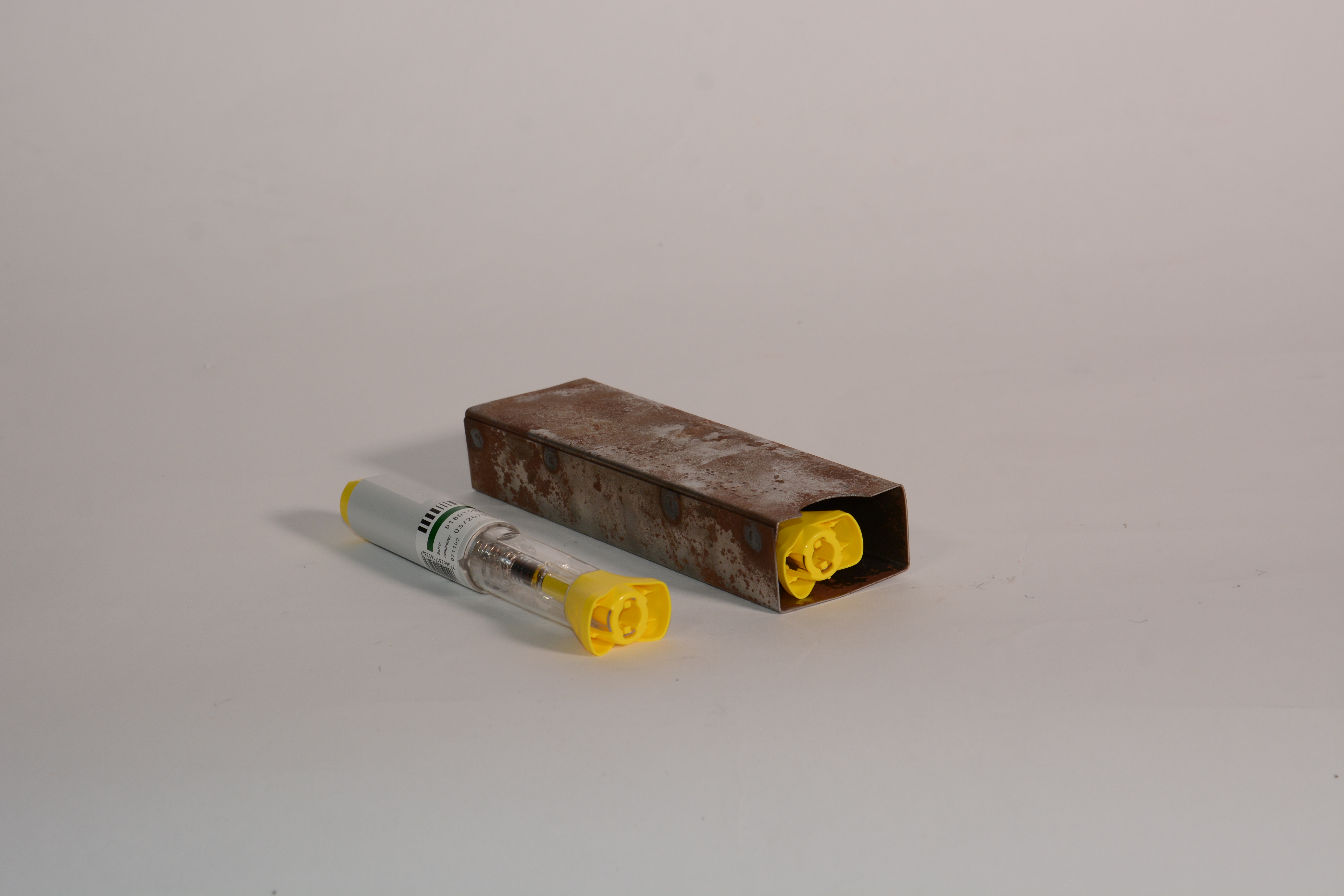
Cytotoxic Drug Spill Kit (for home use) by Cairns Technologies.

Metex 10 mg, by Medac, Wedel, Germany.

Metoject 10mg, by Medac, Wedel, Germay.

Thanks to: Kathryn Abarbanel, Katarina Burin, Lucien Castaing-Taylor, Mikkel Due, Abi Palmer, Julia Smachylo, Christian Struck, Åshild Marie Vige, Legs, Advanced Critical Media Practice and Film Study Center Harvard.
Campari Moment

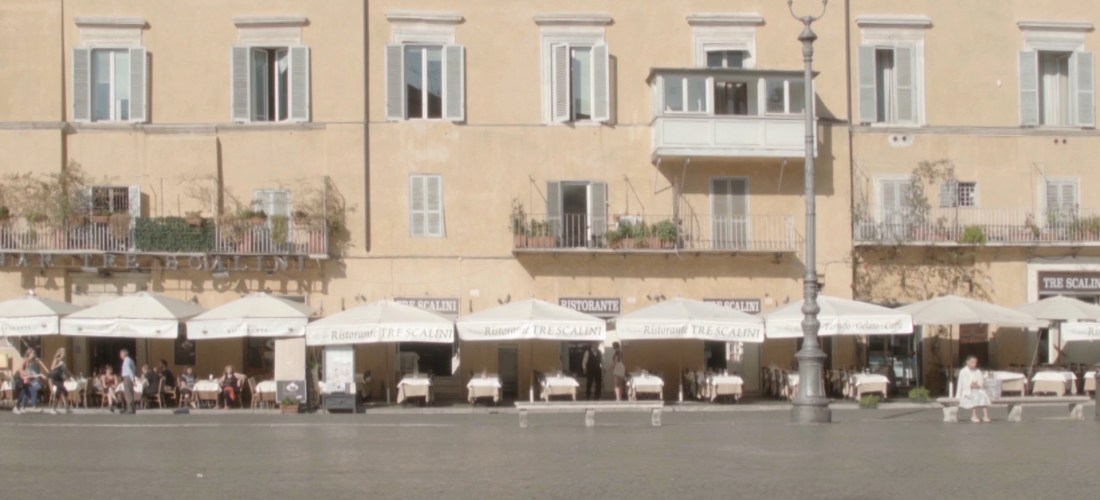
Christian Norberg-Schulz was sittingat Piazza Navona in Rome after having spent the morning in the valleys north of the city. He was enjoying a Campari and watching life in the piazza, when he was struck by a sudden feeling: that the piazza and the valleys that he had visited earlier in the day, were the same. Not similar: the valley was rural with steep tufa- rock formations in the landscape; coloured yellow and brown. The piazza was surrounded by buildings, filled with fountains, sculptures, restaurants and people. In an article discussing the importance Rome had on his authorship he describes the moment:

Suddenly, I had a feeling of still being in a ‘tufa-valley’: this is the same, (despite not being similar)! So started my study of the genius loci. Because of sudden inspiration, and not at all a logical line of thougth.

(Christian Norberg-Schulz, 1999: 102)

The unedited rushes are both depicting me ordering anddrinking a Campari at Piazza Navona. I: Campari-Moment was shot with a Blackmagic Design Camera, and one Philips Radio-Microphone recording into the Zoom H4n, with the help of Mikkel Due 16 September 2014. II: Campari-Moment was shot with a Blackmagic Design Camera, and one Philips Radio-Microphone recording into the Zoom H4n, with the help of John Øyvind Hovde 15 February 2016. Language: English. The storyboard is created with references to the work of others: the poem Les Fenêtres IV (1927) by Rainer Maria Rilke, Gian Lorenzo Bernini’s sculpture Fontana dei Quattro Fuimi (1651), the film The Miracle worker (1964), and Federico Fellini’s advert for Campari (1984), as well as stills from my own footage.

Back to The Fenestral Essay Film

From Above

Curated by Anna Ulrikke Andersen at the Institute of Contemporary Arts, London for the Architecture Film Festival London.

A curated selection of seven short films from the Architecture Film Festival London 2017 Competition, asking how films about our built environment could open up a discussion of what it means to see, or be seen from, above. The selected films all addresses the theme in different ways, using different techniques, bringing up questions of hierarchical structures, control, history, materiality, freedom, flexibility and technology. The screening will run for 72 minutes.

  • Scriptych (Ollie Palmer, 2016, France, 9 mins) 
  • Building no.13 (Amir Gholami, 2016, Iran, 10 mins)
  • Five Lives of the Bradbury Building (Jasper Stevens, 2016, UK, 3 mins)
  • White Mountain (Emma Charles, 2016, UK, 20 mins)
  • 24h Dahlem (Clara Jo, 2016, Germany, 17 mins)
  • Construction Lines (Max Colson, 2017, UK, 8 mins)
  • Waves,,,Unmastered (Fritz Laszlo Weber, 2016, Greece/Germany, 7 mins)

Back to Other Projects

X / EARWITNESS

X / Earwitness (2018) HDV, 10:00. Directed by Ruth Bernatek and Anna Ulrikke Andersen.

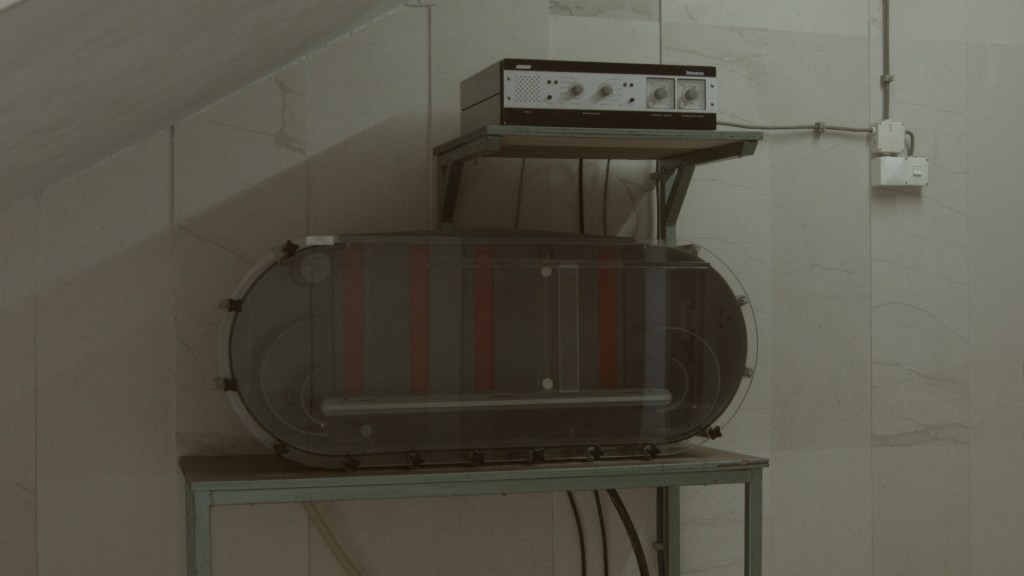
X / Earwitness (2018) is a film based around a field research trip to Greece, made by myself and architectural historian Ruth Bernatek, engaging with her research of the sounds, spaces and landscapes of the Polytope de Mycenae (1978), an open air multimedia installation by the composer and architect Iannis Xenakis. 

Initially tracing the sonic and spatial fragments of the original event, the film turns to address the concept and testimony of the ‘earwitness’. Four channel sound is used to explore how our auditory memory is filtered, stripped and framed through the present-day; experienced as the movement between, and return to, particular places and spaces in Greece. Language: Greek and English.

X / Earwitness (2018) by Ruth Bernatek and Anna Ulrikke Andersen

Polytope de Mycenae was performed over three consecutive evenings in September 1978.
Presented as a ‘feast in light, movement and sound’, it was the last in Xenakis’ series of ‘polytopes’ and included live and electroacoustic music, anti-aircraft search lights, flaming torches, animals, human voices and bodies. It took place amongst the nocturnal ancient ruins of Mycenae; the acropolis and citadel walls, Mount Zara to the South and Prophitas Elias to the North.

The Mycenae polytope is uniquely and tightly bound to Xenakis’ experience of returning to Greece as a ‘pilgrim’ after nearly thirty years of exile, that coincided with the so-called ‘return to democracy’ in Greece after the collapse of the military junta in the autumn of 1974.Convergent artistic, architectonic and musical qualities of the event therefore possessed a particular political meaning, both in the ideological cultural regeneration of Greece, Xenakis’ home-land, but also in its promotion of a new type of Greek national consciousness.

With thanks to:
The Dassis Family
Bartlett Architecture Research Fund
London Arts and Humanities Partnership
Sound Making Space
Penelope Haralambidou and Ifigenia Liangi

Back to Other Projects

PhD thesis (2018)

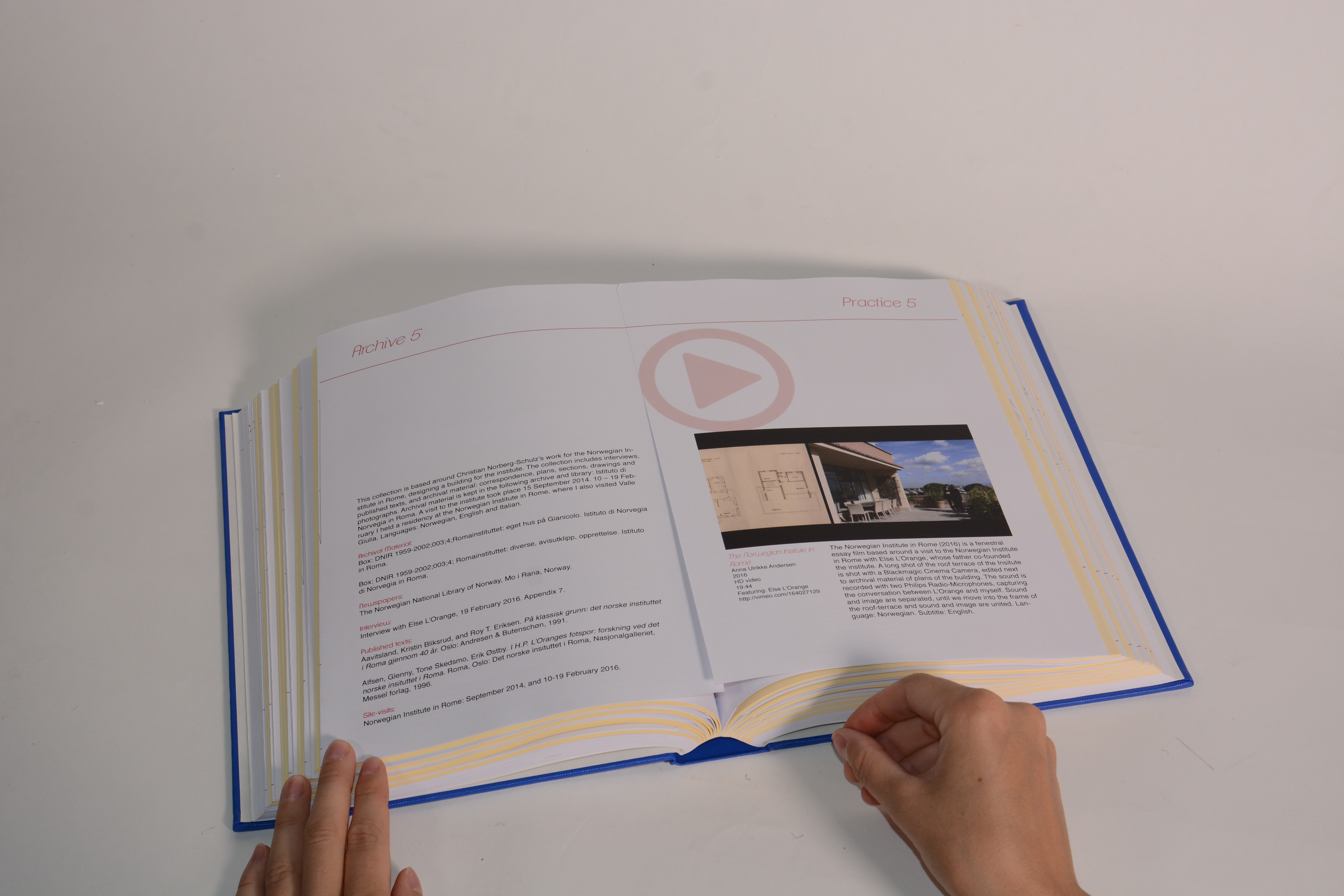
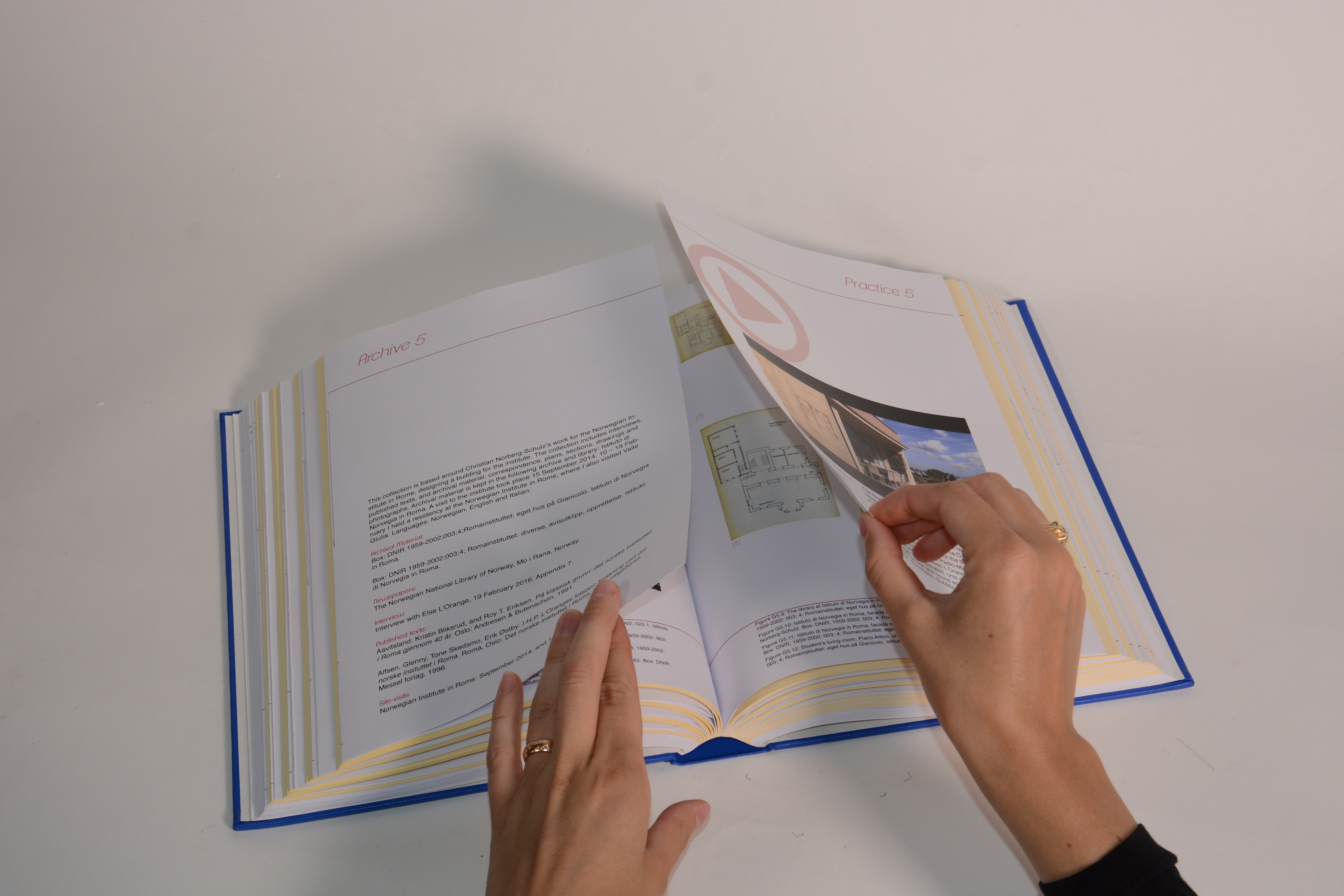
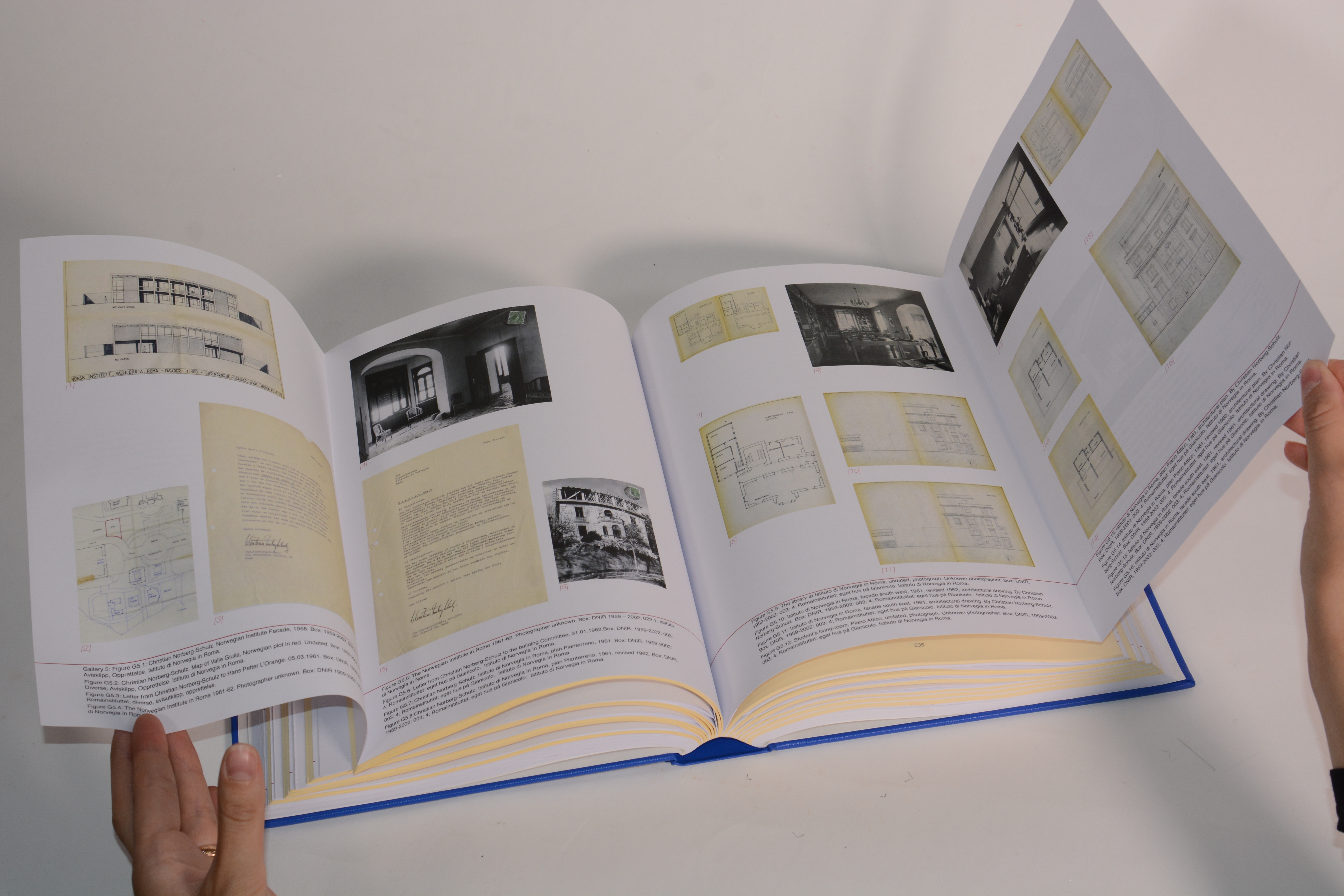
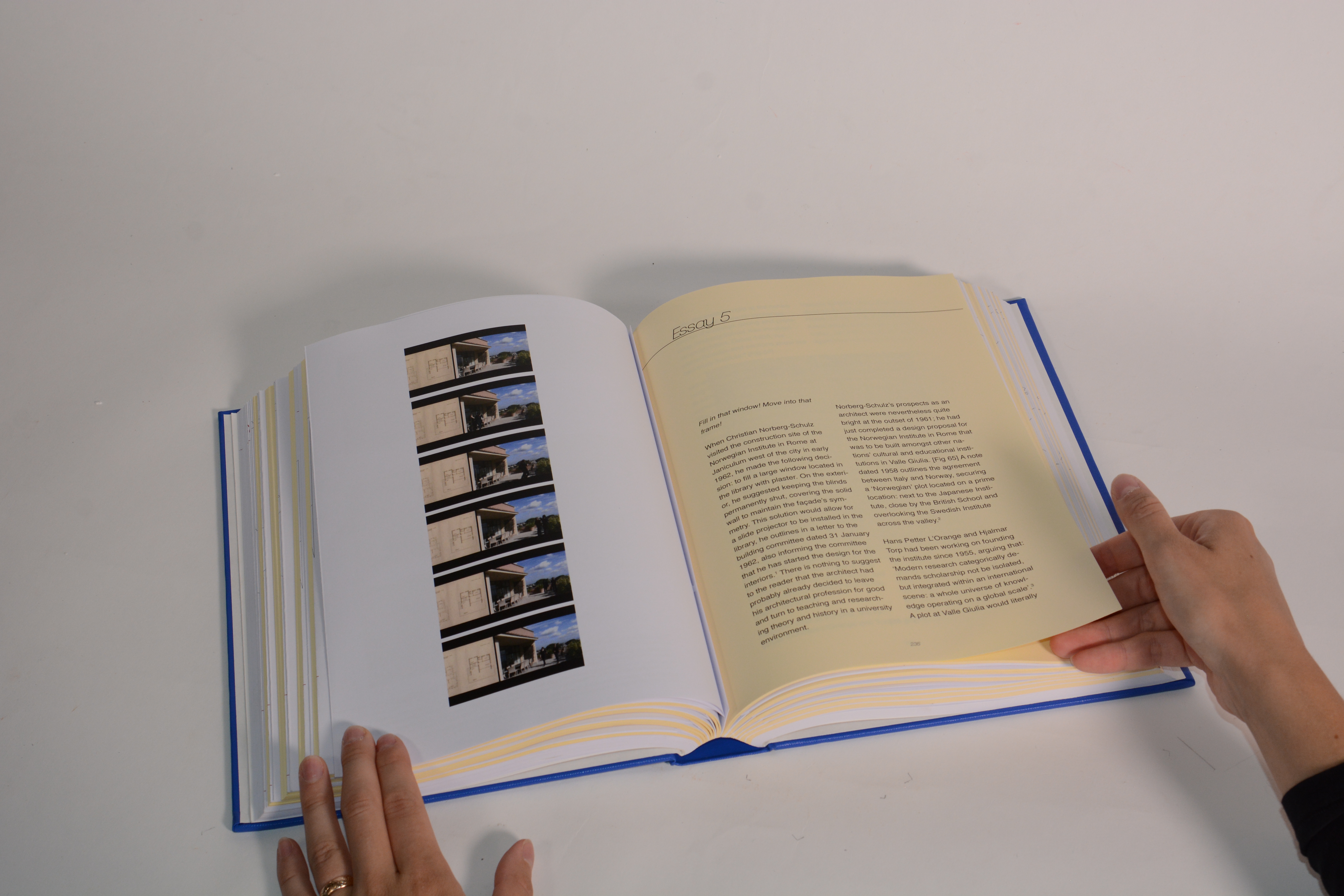
“Ten Windows Following Christian Norberg- Schulz: Framing, mobility and self-reflection through the fenestral essay film” 

PhD thesis in Architectural Design, The Bartlett School of Architecture, UCL, 2018. Supervised by Professor Jane Rendell and Dr. Claire Thomson. 

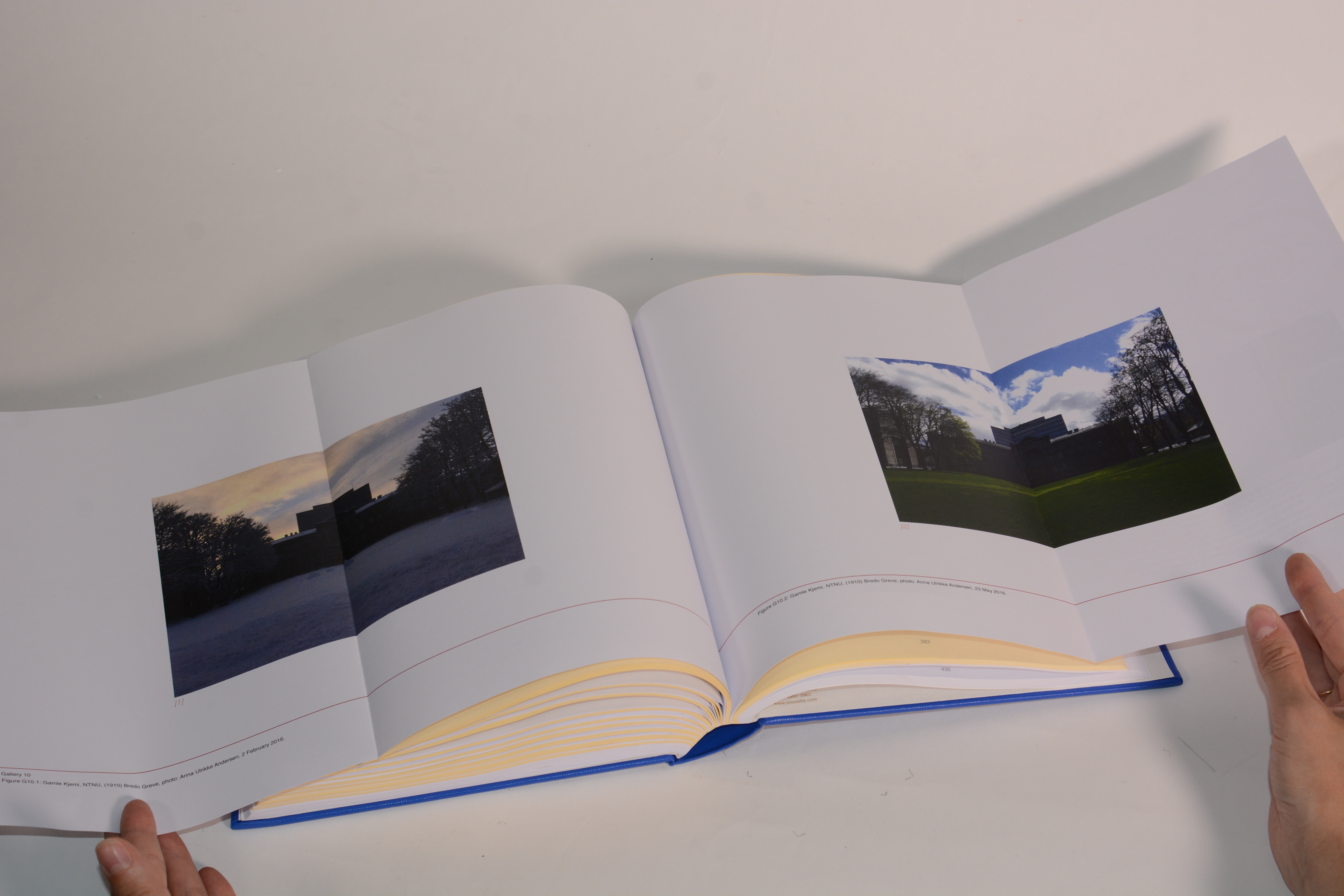
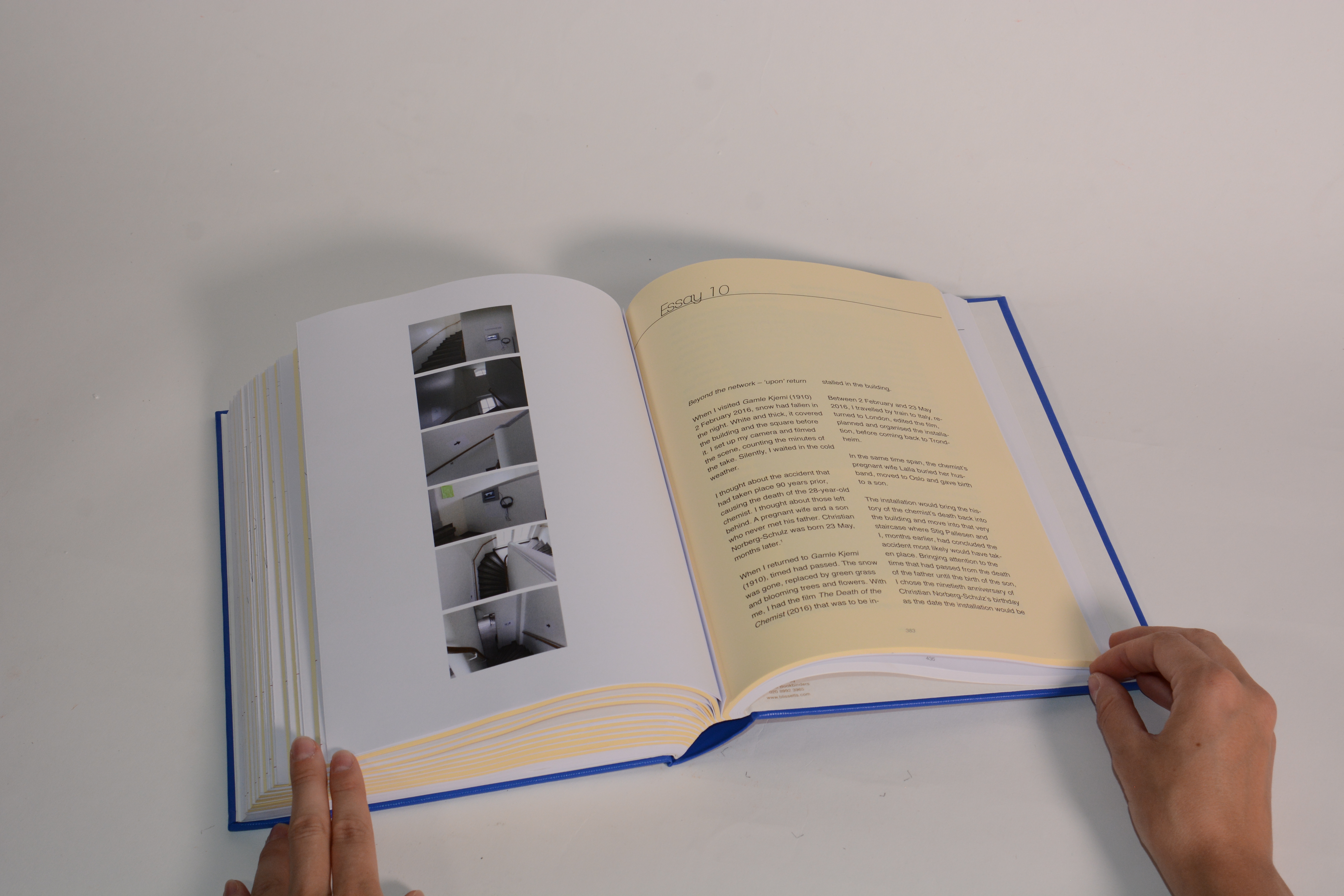
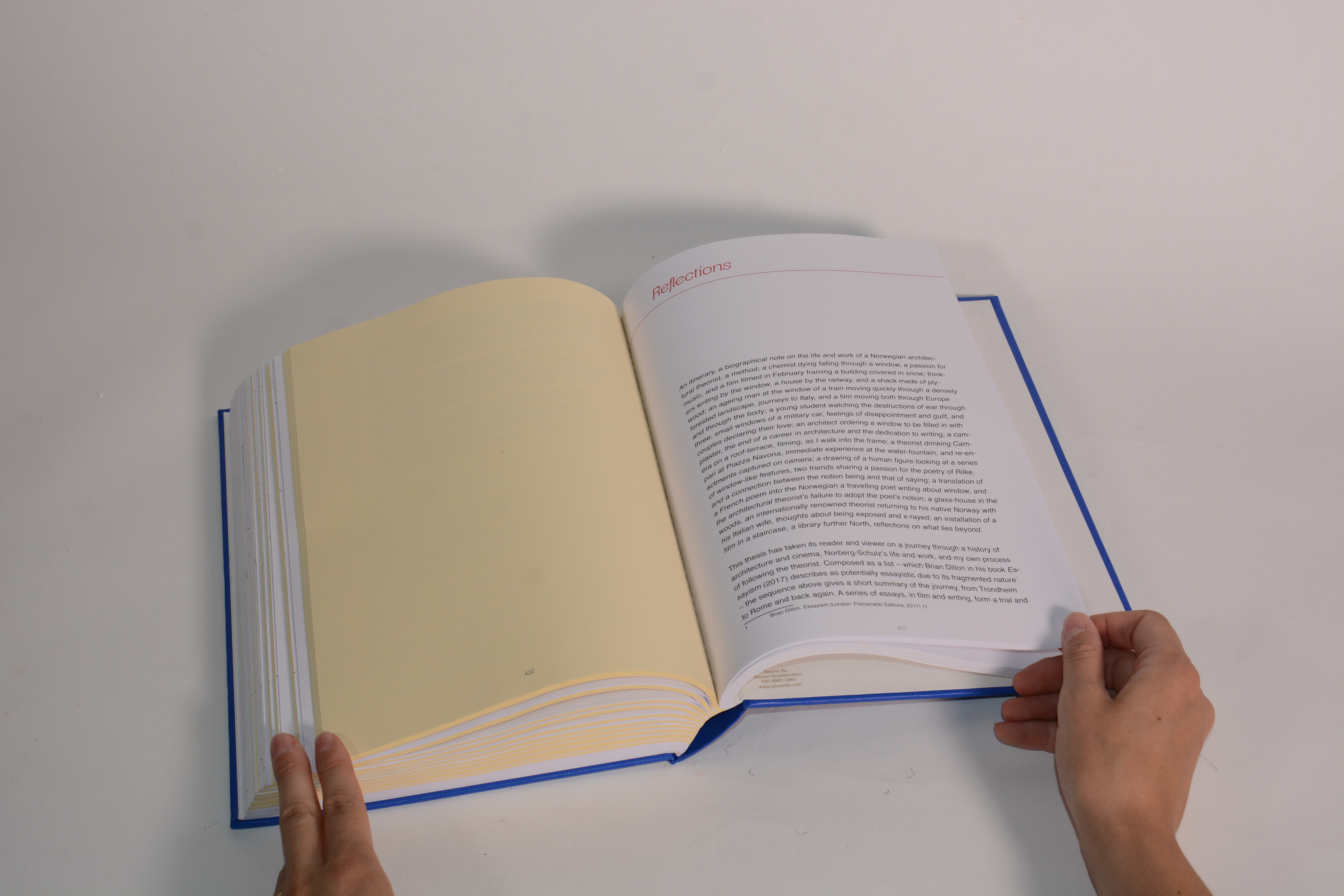
This thesis investigates the window in the life and work of Christian Norberg-Schulz, aiming at finding new nuances and ambiguities within his existing oeuvre, and questioning my own position as a ‘follower’ of Norberg-Schulz. Taking the window as both literal and figurative, I ask in what ways the window can become a tool for investigating Norberg-Schulz’s concept of mobility and his theory of place through the fenestral essay film – specifically through mobility, framing and self-reflection. 

Norberg-Schulz’s theory of genius loci – the spirit of the place – has been widely discussed and critiqued (Loevland et.al. 2009; Otero- Pailos, 2010; Wilken 2013). Yet, no one has yet looked at the role of the windows in his life and work, and specifically in his theory of genius loci: which is surprising because he describes the window as the place where “the genius loci is focused and ‘explained’”(Norberg- Schulz, 1980: 179). I argue therefore that the window plays a vital role both in Norberg-Schulz’s life and work, particularly related to his reading of the work of the poet Rainer Maria Rilke. 

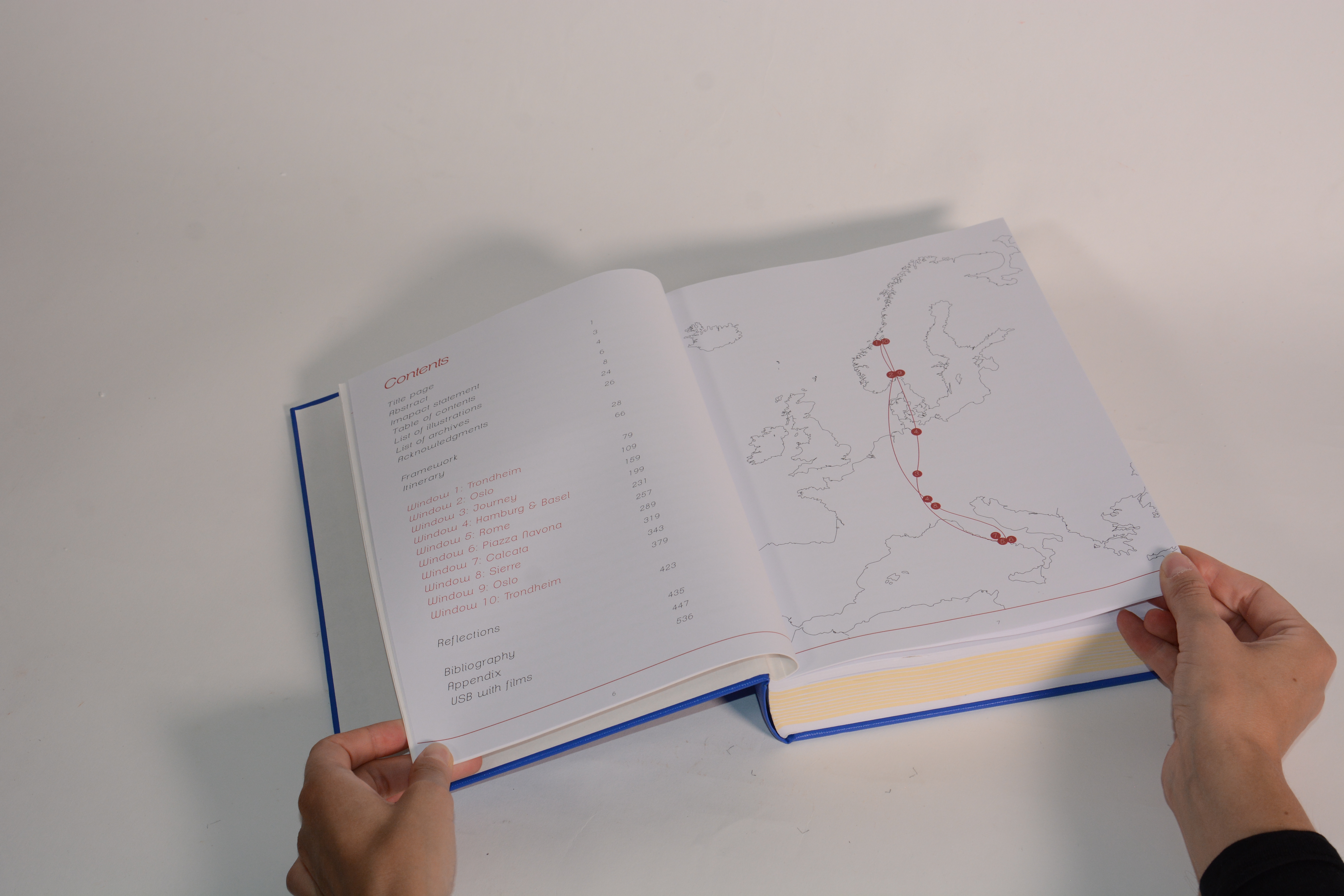
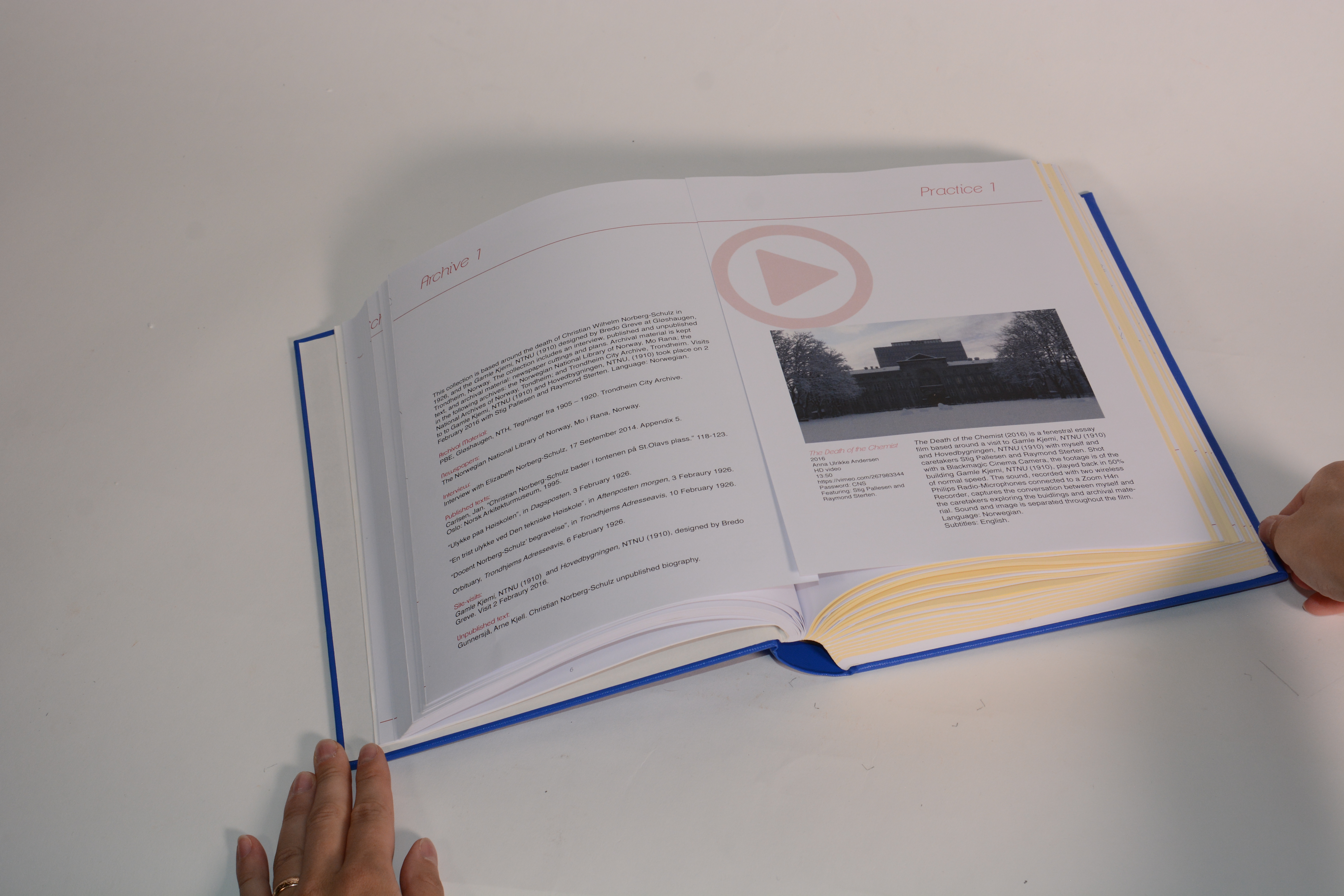
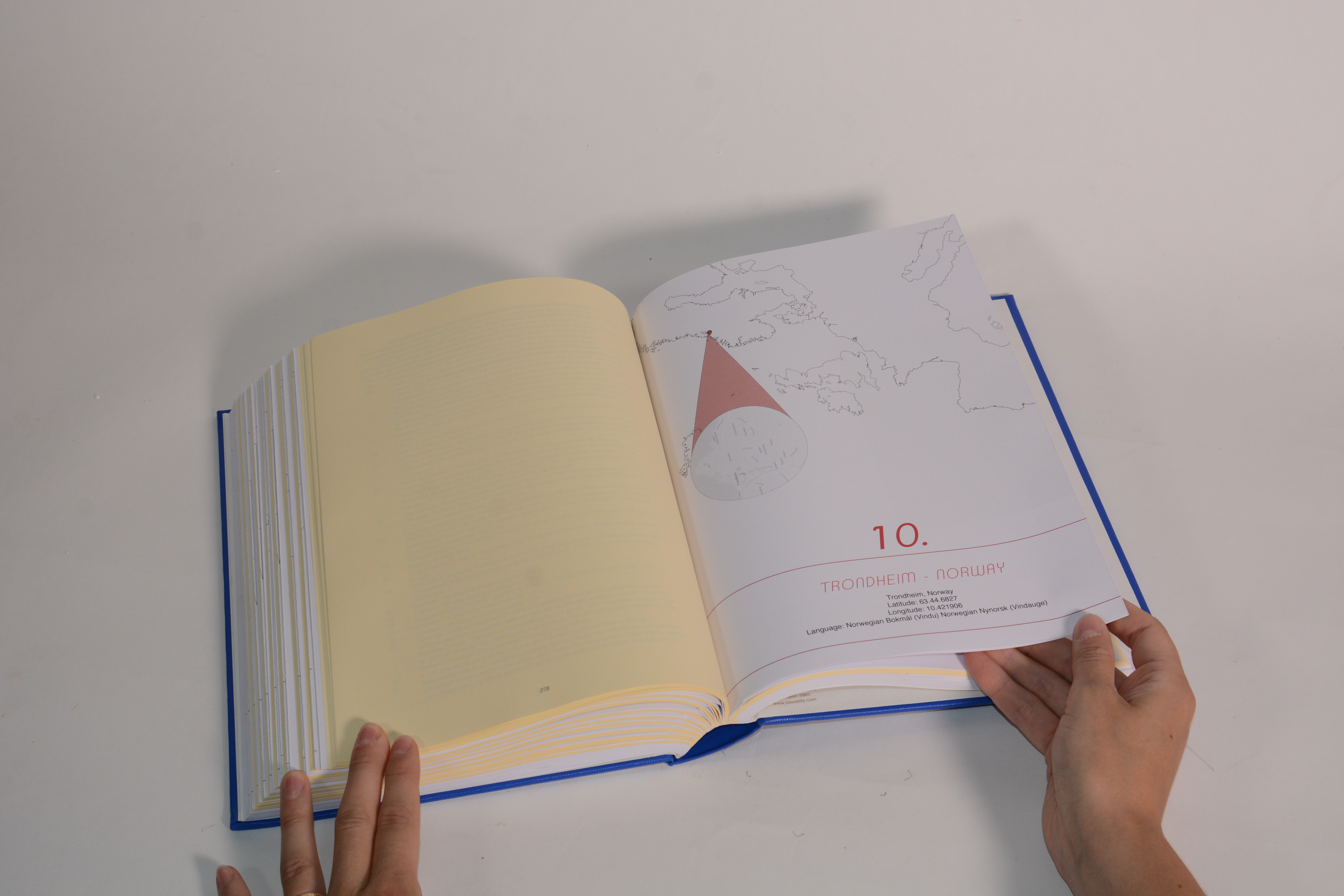
Through oral history, site-visits, close-readings of texts, archival research, film-making and essay writing I follow Norberg-Schulz’s window on a return journey between Norway and Italy. Building upon existing methodologies of Jane Rendell’s site-writing as a critical spatial practice (Rendell: 2010) combined with the genre of the essay film (Corrigan: 2011; Rascaroli: 2017) and architecture essay film (Haralambidou: 2016) I consider how the window features both literally and figuratively in a series of fenestral essay films which explore mobility, framing and self-reflection conceptually, visually and spatially. Introduced through an itinerary, and concluding with a framework and reflections, this thesis is located at the junction between film-making and architectural history, presented through 10 Windows, each one comprising an essay and a film. 

The thesis can be requested from UCL Library

Graphic Design: Essi Viitanen

Back to The Fenestral Essay Film

Capturing Windows on Film

Workshop at the University of San Juan, Puerto Rico, School of Architecture. Organised by Informa 2019 Event Series. 30-31 March 2019. 

The objectives of the 2-day workshop were to allow participants to explore and learn specific techniques of filmmaking to investigate architecture. Aimed at altering the way the participants might think about the literal and figurative window in film and architecture, the workshop was aimed at students of architecture, arts, humanities or creative media, or professionals in architecture or film who were interested in exploring the way their practice could take a more theoretical approach. Following a lecture on windows in film, architecture and literature, the participants were given a set of exercises to experiment with the separation and sound and image, before engaging with existing work – films and texts – using these filmmaking techniques. The exercises were be followed by discussion and feedback. 

Student feedback: 

“I feel, the workshop provided me with the necessary basics and techniques to start my own filming and editing process. In my opinion, it was remarkably delivered. Clear. Simple. Neat. Smart. Extremely motivating.” 

“I have learned to appreciate more the small details of the architecture, not only the windows by also the different ornaments that they may have, and also the artistic and linguistic part of the window.” 

Back to The Fenestral Essay Film

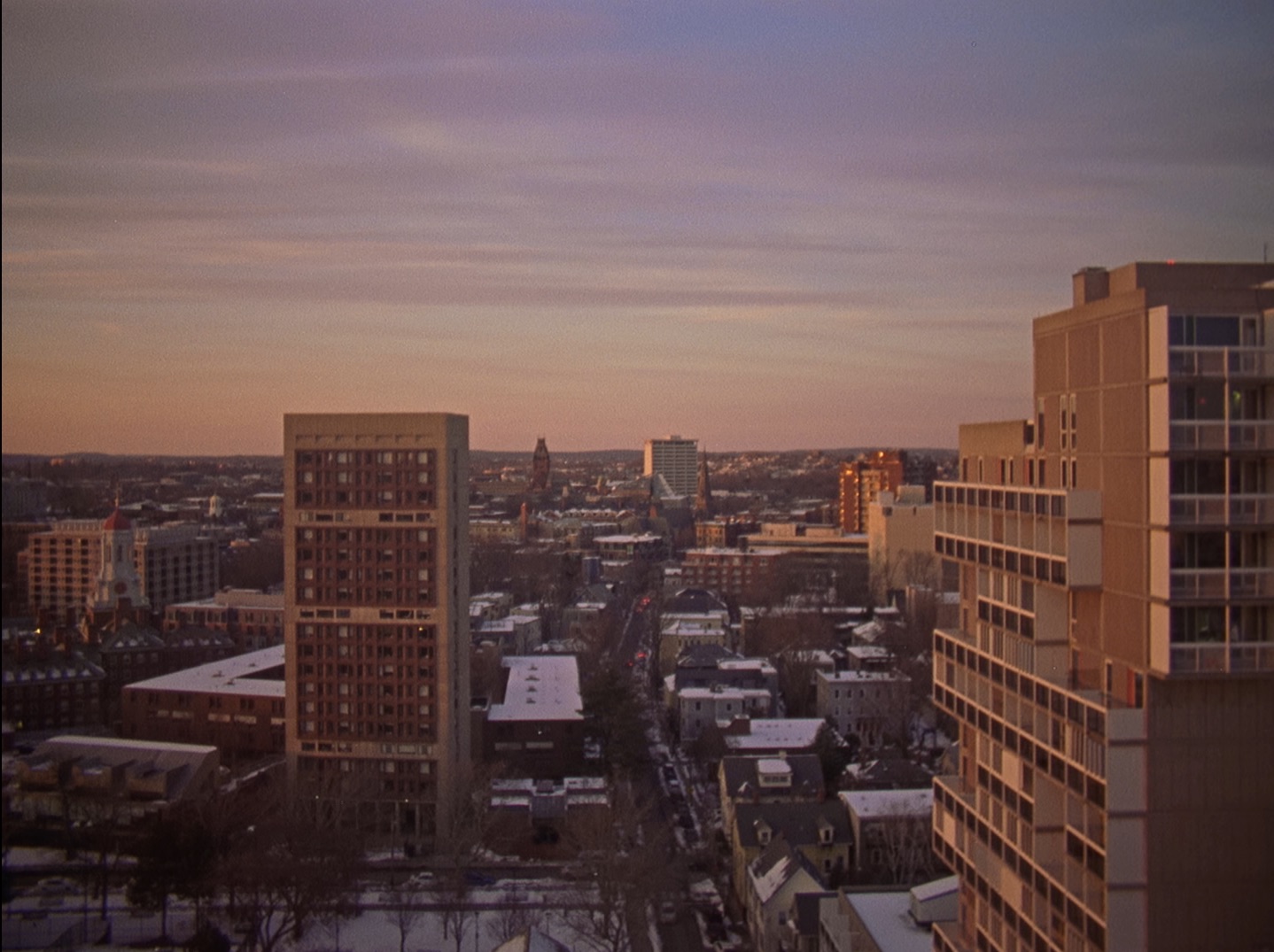
X for Methotrexate

X for Methotrexate, Anna Ulrikke Andersen, (2019), 16mm, 08:00.
With Michael E. Weinblatt, M.D. Produced at the Harvard Film Study Center. 

Funded by Viken Filmsenter Fordypningsstipend. 

This film explores the various sites involved in the research, development, production and use of the medication Methotrexate, commonly prescribed to treat rheumatic illness. Based on an interview with Michael E. Weinblatt M.D., whose research was instrumental in making the drug available for patients with rheumatoid arthritis, the film focuses on patients’ perspectives of being in treatment. By straddling facts and fiction, the film addresses the gap that exists between the language used by healthcare professionals and the bodily experience of the patient living with chronic illness, and ventures on a journey through the different sites and sets of knowledge available to the two. 

This film was screened at the Harvard Film Archive, CCVA, 2 May 2019, and 8 May 2019.

Back to an A to X of Chronic Illness

H for Hand

H for Hand, Anna Ulrikke Andersen (2018), 08:00.
Featuring Håvard Jektnes.
Produced at the Harvard Film Study Center. 

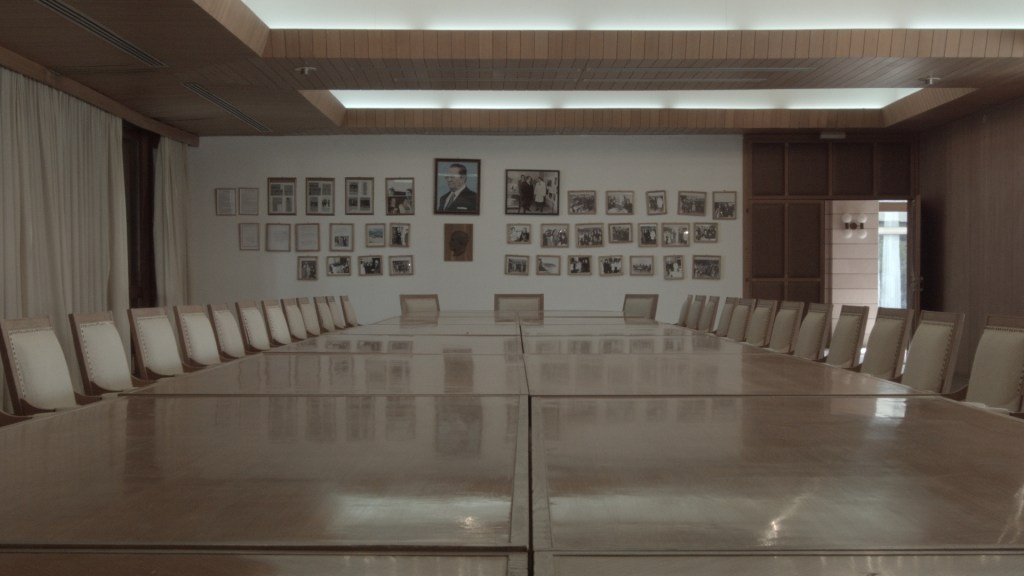
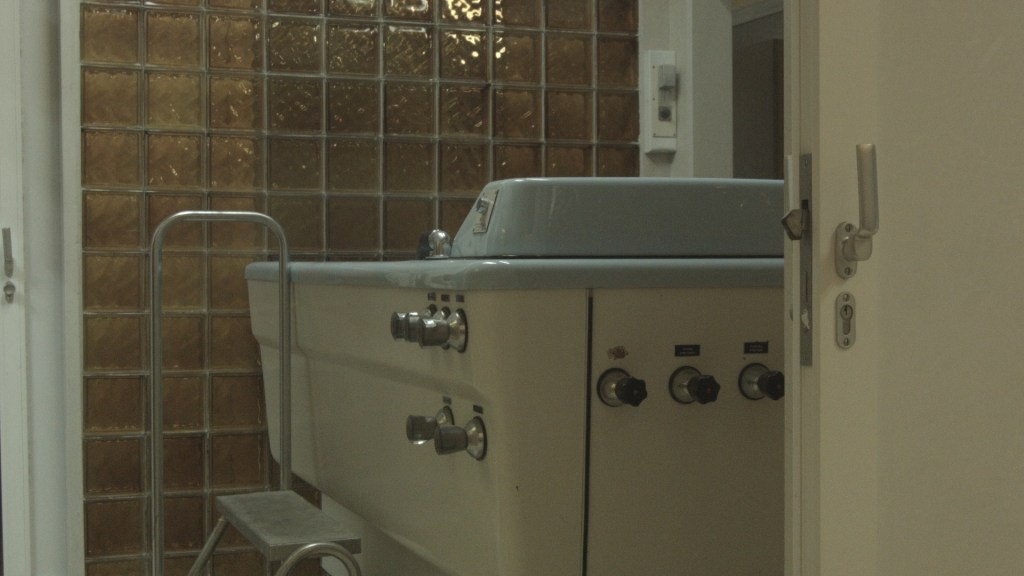
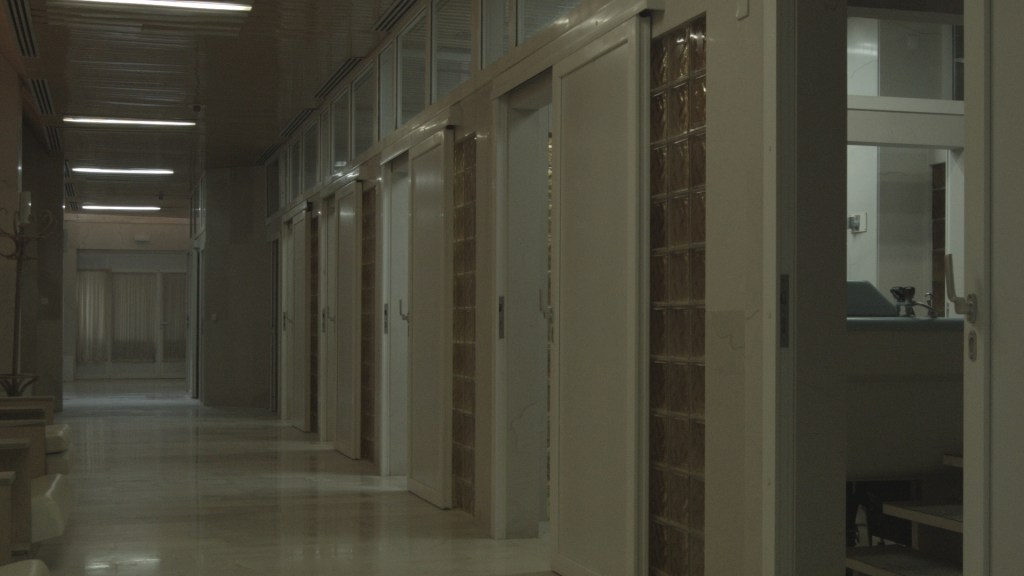
This film focuses on the history of Villa Galeb (1974) in Igalo, Montenegro. Initially built to the former Jugoslavian head of state, Tito, to cater to his needs for physical treatment of chronic illness, the villa is currently owned by the nearby Institute Dr Simo Milosevic JSC Igalo. Filmed using a crutch as a tripod, the shaky footage of the building enhance the physical aspects of filmmaking, as the building’s history of housing a casino, or Norwegian patients undergoing treatment, is unravelled.

This film is a re-working of the multimedia performance Villa Casino (2018).

Back to an A to X of Chronic Illness

Villa Casino

Multimedia Performance / Essay Film
20:00
For “Crip Casino” with Abi Palmer
Platform Southwark
3 and 4 August 2018
More info and tickets
 
A test gorup of 6 Norwegian patients with rheumatic illness were sent aborad to be a test group for rehabilitation in Igalo, Montenegro. Due to war, there had been a five-year intermission to what had been a Norwegian governmental funded rehabilitation programme since 1975, successfully rehabilitating the Northern patients in Montenegro’s warm climate. Instead of being housed in the Institute’s main buildings, the small test group were accommodated in the nearby Villa Galeb (1976), as reported in the Norwegian pamphlet Igalos venner (Friends of Igalo) no 6, 1996. One of Tito’s many villas in former Yugoslavia, Villa Galeb was explicitly built with rehabilitation facilities, bunker, living and working quarters for the head of state. After Tito’s death, caused by the chronic illness the villa was built to treat, the building temporarily housed a casino.

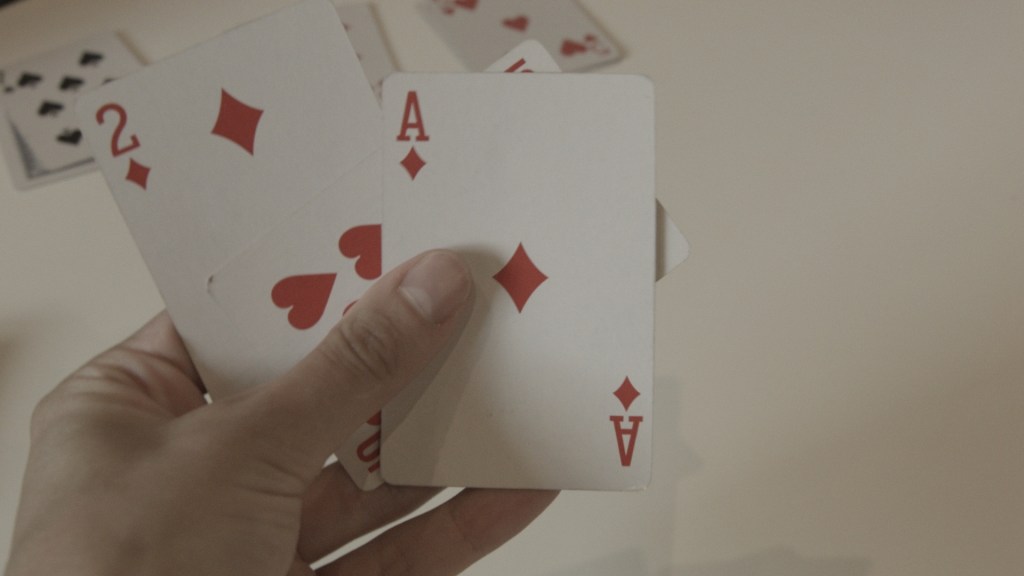
Commissioned and created specifically to address the thematic posed by Abi Palmer’s Crip Casino, the multimedia performance Villa Casino (2018) engages with the history of Villa Galeb interwoven with the experiences of the Norwegian patients undergoing treatment in Igalo since the programme started in 1975 until today. The reading of an essay accompanies footage of the villa that is captured using crutches instead of a tripod. This footage is intercut with a game of cards between the filmmaker herself and fellow patient Håvard Jektnes.

The live performance of this ‘essay film’ in-the-making, will discuss the history of the building and genre of the architectural essay film as a method of architectural history where personal experiences of chronic illness and the architecture of rehabilitation are included into the architectural historical narrative. The project marks the beginning of Andersen’s research project: Moving In | Moving Through: mobility and immobility in architecture of rehabilitation explored through the essay film.

With special thanks to Håvard Jektnes, Alen Filipović and Institute „DR Simo Milošević” JSC Igalo, Montenegro.

The performance was later re-worked into a film titled H for Hand (2018).

Back to an A to X of Chronic Illness